Showing posts with label fracking. Show all posts

Monday, July 15, 2013

Fracking Can And Is Being Done Safely, Cleanly, And Efficiently

Let's think this through.

Recycling is a good thing, right?  This word has been around for quite a while now.  People understand it and consider it a good thing.  We are familiar with the "recycling" of aluminum cans, glass and plastic bottles, newspapers and plastic bags.  In fact many of us have been dutifully separating these items from our trash and putting them out for waste pickup on a regular basis for years.  Most of us make nothing from doing this, and even though it requires a bit of effort and forethought, we have learned to do it "for the good of the environment".  It makes sense.  These materials can be re-used and turned into other useful products and by doing so reduce the burden on our landfill waste disposal sites.  It is a "win-win" situation for those modern motivators and business planners.

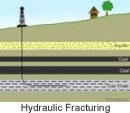
So why not recycle the water used in the "fracking" or hydraulic fracturing of rocks containing oil and gas?  (See the many other articles in this blog explaining the hydraulic fracturing process.)  Often when a well is drilled and used to produce oil and gas it also produces a lot of "formation water".  This is water that has been trapped in these underground rocks for thousands, millions, tens and even hundreds of millions of years.  Why not re-use this water to fracture rocks and produce more oil and gas?  After all, the concern over water usage and "pollution" is used as the primary motivator by the so-called "environmentalists" so actively opposed to fracking.  Recycling makes sense, so why is it not more widely embraced and practiced?

The reason why opponents of fracking won't admit it can be done safely and without destroying our  precious  freshwater sources, is because the opponents of fracking don't really care that much about water.  They have other motives.  Dig into an article.  Read farther than the headlines, which are always emotionally charged, and usually written from a politically liberal viewpoint.  In this case here is a quote from the following article:

"The practice scales down the amount of freshwater used for fracking, but environmentalists say it does nothing to assuage concerns about groundwater contamination, and only facilitates the extraction of fossil fuels that produce climate-warming gases."

So there it is, the real underlying motivation of "banning fracking" is to stop or limit the production of fossil fuels and the alleged link to "climate warming gases".  So the concern about safe drinking water is an emotional ploy.  Clean water is something everyone needs and desires.  It is a clever trick, and in my opinion, evil, because it deprives people all around the world of something else everyone needs and wants: inexpensive energy.  We cannot all ride bicycles and walk wherever we want to go.  Nobody likes being deceived, and I see it going on all around.  The only solution to this intentional misinformation is education.  So here we are.

Another poorly understood benefit for using formation water, or re-used water in the fracking process is the water is usually in "equilibrium" with the rocks that are being fracked.  After all, the water has been sitting there in the pore spaces of the rocks to be fracked for a long time.  It has time to come to chemical equilibrium.  Pumping it back underground during the fracking process does nothing to harm that balance.

There are more benefits to recycling.  It saves money, tens and sometimes hundreds of thousands of dollars on the cost of drilling and completing a well.  It reduces the cost and damage caused by the need of trucks hauling water.  It reduces the cost of disposing of waste water.  The water used comes from the deep oil and gas producing rock formations, thus it is by definition and usage, "polluted".  So why  not use it, and put it back where it came from and leave our much shallower drinking and irrigating water alone.  This is truly a win-win situation, something everyone can be happy with.

Oil and gas companies and their service companies, like Baker Hughs and Halliburton, and Schlumberger, have been drilling and completing wells in similar ways for decades.  They are very, very competitive with one another.  Read the remainder of the article below.  Why is this recycling not publicized and done more?  Think government regulation.  Think government politically motivated interference.  Think environmental groups lobbying (bribing) politicians.  Think big businesses promoting "alternative" energy like solar and wind, (which are fine in certain circumstances).  Think corruption, like Solyndra.  Think of ignorance.  Think of those making and seeking to make Billions of dollars on "carbon taxes" and "carbon credits".  Think Al Gore, and others acting as parasites on the public.  Who suffers?  You and I, us, the public, in the form of higher energy prices, which increase the cost of everything.

What do you say we fight back against the darkness and danger or ignorance.  Spread the word.
Peter


Analysis: Fracking water's dirty little secret - recycling
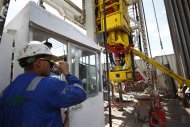
A worker drinks coffee as he watches a drilling process at a shale gas fracking facility run by Poland's PKN Orlen company on the outskirts of the village of Uscimow, south-eastern Poland, June 5, 2013. REUTERS/Peter Andrews


By Nichola Groom
LOS ANGELES (Reuters) - The oil and gas industry is finding that less is more in the push to recycle water used in hydraulic fracturing. Slightly dirty water, it seems, does just as good a job as crystal clear when it comes to making an oil or gas well work.

Exploration and production companies are under pressure to reduce the amount of freshwater used in dry areas like Texas and to cut the high costs of hauling millions of barrels of water to oil and gas wells and later to underground disposal wells.

To attack those problems, oilfield service companies like Halliburton, Baker Hughes and FTS International, are treating water from "fracked" wells just enough so that it can be used again. Smaller companies like Ecosphere Technologies Inc have also deployed similar methods.

"It is a paradigm shift," Halliburton's strategic business manager of water solutions, Walter Dale, said.

Until recently, many companies considered recycling too expensive or worried that using anything other than freshwater would reduce well output.

But oil and gas companies are increasingly treating and reusing flowback water from wells, which unlike freshwater is very high in salt, with good results.

The practice scales down the amount of freshwater used for fracking, but environmentalists say it does nothing to assuage concerns about groundwater contamination, and only facilitates the extraction of fossil fuels that produce climate-warming gases.


"It doesn't lessen the potential for groundwater contamination, and it can increase the amount of contaminants that you are exposing the groundwater to," said Myron Arnowitt, Pennsylvania director for Clean Water Action.

Read the remainder or the article here:
 http://finance.yahoo.com/news/analysis-fracking-waters-dirty-little-165146500.html


Thursday, September 6, 2012

Get The Facts About Methane In Groundwater In New York


Before flying off the fracking handle, opponents of natural gas development need to learn the facts about the natural occurrence of gas in the environment compared to the effects of drilling and such things as hydraulic fracturing.  The USGS is about as "unbiased" a source of information as there is, but bear in mind, even the USGS must be politically correct.  Consider who funds them.
Peter
2012, Kappel, William M.; Nystrom, Elizabeth A.
USGS Open-File Report: 2012-1162

Abstract:

New York State is underlain by numerous bedrock formations of Cambrian to Devonian age that produce natural gas and to a lesser extent oil. The first commercial gas well in the United States was dug in the early 1820s in Fredonia, south of Buffalo, New York, and produced methane from Devonian-age black shale. Methane naturally discharges to the land surface at some locations in New York..

At Chestnut Ridge County Park in Erie County, just south of Buffalo, N.Y., several surface seeps of natural gas occur from Devonian black shale, including one behind a waterfall. Methane occurs locally in the groundwater of New York; as a result, it may be present in drinking-water wells, in the water produced from those wells, and in the associated water-supply systems (Eltschlager and others, 2001).

The natural gas in low-permeability bedrock formations has not been accessible by traditional extraction techniques, which have been used to tap more permeable sandstone and carbonate bedrock reservoirs. However, newly developed techniques involving horizontal drilling and high-volume hydraulic fracturing have made it possible to extract previously inaccessible natural gas from low-permeability bedrock such as the Marcellus and Utica Shales.

The use of hydraulic fracturing to release natural gas from these shale formations has raised concerns with water-well owners and water-resource managers across the Marcellus and Utica Shale region (West Virginia, Pennsylvania, New York and parts of several other adjoining States). Molofsky and others (2011) documented the widespread natural occurrence of methane in drinking-water wells in Susquehanna County, Pennsylvania. In the same county, Osborn and others (2011) identified elevated methane concentrations in selected drinking-water wells in the vicinity of Marcellus gas-development activities, although pre-development samples were not available for comparison.

In order to manage water resources in areas of gas-well drilling and hydraulic fracturing in New York, the natural occurrence of methane in the State's aquifers needs to be documented. This brief report presents a compilation of data on dissolved methane concentrations in the groundwater of New York available from the U.S. Geological Survey (USGS) National Water Information System (NWIS) (http://waterdata.usgs.gov/nwis).
ofr20121162
Additional Publication Details
Publication TypeUSGS Numbered Series
TitleDissolved methane in New York groundwater, 1999-2011
AuthorKappel, William M.; Nystrom, Elizabeth A.
Year2012
SeriesOpen-File Report
Series Number2012-1162
LanguageEnglish
PublisherU.S. Geological Survey
Publisher LocationReston, VA
Contributing OfficeNew York Water Science Center
Description6 p.
Lat Bound N0450042
Lat Bound S0402940
Lon Bound E-0715725
Lon Bound W-0794554
CountryUnited States
StateNew York
CommentsPrepared in cooperation with the New York State Department of Environmental Conservation

Monday, August 13, 2012

Association of American State Geologists Declares Fracking To Be Safe

Could those groups scaring everyone about the dangers to our water supply caused by fracking be exaggerating?  To put it politely, YES.  The Association Of American State Geologists position statement on hydraulic fracturing is as follows:

http://www.stategeologists.org/temp/AASG%20Hydraulic%20Fracturing%20statement.pdf

AASG on Hydraulic Fracturing
August 12, 2012 | Association of American State Geologists“After decades of hydraulic fracturing-related activity there is little evidence if any that hydraulic fracturing itself has contaminated fresh groundwater. No occurrences are known where hydraulic fracturing fluids have moved upward from the zone of fracturing of a horizontal well into the fresh drinking water.” Quoted from the Association of American State Geologists statement.


Hydraulic fracturing as applied in the oil and gas industry (commonly referred to as "fracking," "fracing," or "hydrofracking") is
the process of pumping a mixture of water, sand or similar material, and chemical additives, under high pressure, to create small
interconnecting fractures to increase permeability in targeted subsurface rock formations. Oil and gas companies perform
hydraulic fracturing after a well is drilled, cased and cemented, to increase the well’s productivity. Sand is used to prop open the
fractures, and chemical additives reduce friction, control bacteria, decrease corrosion, and serve other purposes. More than 50
percent of the natural gas, and a growing percentage of the oil, produced in the U.S. comes from hydraulically fractured
reservoirs. The following statement describes hydraulic fracturing in the oil and gas industry, discusses environmental concerns
about the practice and associated activity, and expresses the position of the Association of American State Geologists (AASG).
For an oil or gas well to be productive, hydrocarbons must flow through the rocks in which they are contained (the reservoir) into
the well and to the surface. Much of the oil and gas resource in the U.S. resides in "tight" rock formations, rocks so impermeable
that they do not allow oil and gas to flow easily through the rock to the wellbore. Reservoir rocks are fractured to enhance their
permeability and enable oil and natural gas to flow. Hydraulic fracturing is employed on both traditional vertical wells and on
horizontal wells, which are increasingly common. Most of these wells would not flow at rates that would make the drilling of the
well worthwhile without hydraulic fracturing. The combination of horizontal wells and hydraulic fracturing has led to increasing both
oil and natural gas production and the addition of large new reserves in the United States after years of decline.
Hydraulic fracturing was first used in the oil and gas industry in the U.S. in 1947. Since then, more than one million oil and gas
wells have been hydraulically fractured in the U.S., and hydraulic fracturing has become a common well-stimulation technique.
The application of hydraulic fracturing to horizontally drilled wells uses higher volumes of fluids than more traditional applications.
Today’s accumulated geological and engineering knowledge and improved technology are used to protect public health and the
environment while producing larger volumes of oil and gas. Modern wellbore casing and cementing are designed to isolate
freshwater aquifers from hydraulically fractured oil and gas reservoirs, which are generally thousands of feet below the aquifers.
Casing and cementing are required and regulated by state regulatory agencies and have performed as intended in the oil and
natural gas wells already drilled and currently operating in the U.S.
Environmental impacts are a concern for any activity on or below the land’s surface, including drilling and hydraulically fracturing
an oil or gas well. Constant vigilance is imperative to insure the quality of air, land, and water. Environmental issues raised in
association with hydraulic fracturing and other drilling and production operations include the potential for contamination of fresh
groundwater, water consumption, earthquakes triggered by injecting fluids, venting or flaring methane, and the disposal of fluids.
When they occur, most of these problems are not related to hydraulic fracturing, but to the drilling, casing and cementing of the
well, or disposal of fluids.

After decades of hydraulic fracturing-related activity there is little evidence if any that hydraulic fracturing itself has contaminated
fresh groundwater. No occurrences are known where hydraulic fracturing fluids have moved upward from the zone of fracturing of
a horizontal well into the fresh drinking water. In a single case currently under investigation, contamination may have occurred
when a vertical well was hydraulically fractured in a zone just a few hundred feet below the base of the freshwater. In most cases,
however, freshwater aquifers are near the surface, and are thousands of feet above deeply buried oil- or gas-bearing formations.
Under these geologic conditions, it is highly unlikely that a connection would develop between a hydraulically fractured oil or gas
reservoir and a freshwater aquifer. To further minimize the chance of such a connection, it is important to locate and plug any
abandoned wells that could provide a conduit between reservoir rocks and shallower freshwater aquifers, although no cases are
known where this has led to groundwater contamination from hydraulic fracturing fluids. Contamination has occurred, however,
from spills or mishandling of hydraulic fracturing fluids on the surface. Sound professional and regulatory practices therefore
should be diligently followed when handling fluids on the surface to minimize or eliminate this source of contamination.
Known instances of methane migration associated with well drilling are unrelated to hydraulic fracturing and could occur while
drilling any kind of well. All wells should be carefully cemented and tested properly to avoid methane migration. In some areas,
methane occurs in water wells because there is a natural source of methane within or just beneath the aquifer and in these cases
methane was present in water wells long before drilling or the use of hydraulic fracturing. It is important for oil and gas regulatory
agencies to determine if methane in freshwater wells has increased following drilling activities. This can only be done if baseline
water quality testing is carried out before oil and gas drilling. Also, enhanced practices and regulations may be required to
minimize release of methane, a greenhouse gas, to the atmosphere.

Introduction

The Association of American State Geologists (AASG) represents the State Geologists of the
50 United States and Puerto Rico. Founded in 1908, AASG seeks to advance the science
and practical application of geology and related earth sciences in the United States and its
territories, commonwealths, and possessions.

www.stategeologists.org

AASG statement

State geological surveys are important sources of information and expertise related to subsurface geology, water resources, and
energy. AASG members regularly monitor and discuss issues related to hydraulic fracturing. Several state surveys have been
engaged in investigations of potential freshwater contamination that may have been caused by recent hydraulic fracturing-related
activities; others are undertaking research on, and providing information about, hydraulic fracturing. The following points constitute
AASG’s position on hydraulic fracturing:
• AASG advocates that comprehensive public information based on sound science and open processes be utilized when
formulating energy and environmental policy. We encourage a balanced, independent, fact-based analysis of controversies
regarding natural resource development.
• AASG supports and encourages the disclosure of hydraulic fracturing fluids and chemical additives on FracFocus, the
hydraulic fracturing chemical registry website, developed by the Interstate Oil and Gas Compact Commission (IOGCC) and the
Groundwater Protection Council (GWPC).
• AASG advocates for better understanding and scientific documentation of our subsurface geology and aquifers, which will
result in improved geologic models to help all parties avoid problems that might occur during drilling and hydraulic fracturing
activities of oil or gas reservoirs, especially in new fields. This will allow safer and enhanced production of oil and gas.
• AASG is committed to protecting the nation’s public safety and the natural environment, including groundwater and
surface-water resources. AASG supports the wise and prudent production of oil and gas resources to help fulfill the nation’s
energy needs.
• AASG recognizes the economic and social importance, and the abundance, of oil and gas resources that only can be
recovered if reservoir rocks are hydraulically fractured.
• AASG maintains that state oil and gas regulatory agencies are best equipped, through statutory authority, expertise, and
experience, to ensure that hydraulic fracturing and all other operations associated with oil and natural gas development
proceed in a manner that protects the natural environment, including public safety as well as groundwater and surface-water
resources.
• AASG recognizes that the environmental record of hydraulic fracturing activities over the past 60 years has been
overwhelmingly positive. AASG also maintains that operators who do not follow regulatory requirements should be
appropriately sanctioned and, where appropriate, barred from conducting further oil and gas operations.
• AASG notes that geologic data generally show a significant vertical separation between most oil and natural gas reservoirs
targeted for hydraulic fracturing and the shallower freshwater aquifers. In areas where targets of hydraulic fracturing are
comparatively close to freshwater aquifers, thorough geologic characterization of the area is warranted and even greater
caution should be exercised by operators and regulatory agencies.
• AASG recognizes the fast pace of recent drilling for oil and natural gas and the associated hydraulic fracturing activities. AASG
suggests that caution and careful attention to community relations be exercised by operators, contractors, and regulators in the
design, review, approval, documentation, implementation, and verification of plans for the drilling, completion, stimulation and
production of oil and gas wells.
• AASG encourages continuing work to acquire and maintain local pre-drilling water quality assessment and ongoing information
on groundwater quality, and recommends that casing and cementing operations in hydraulically fractured wells be carefully
documented by operators, contractors, and regulators.
Water used for hydraulic fracturing is generally obtained from nearby water wells, lakes, streams and rivers. Although a
substantial amount of water is used in hydraulic fracturing, this represents a one-time use, and the amount is considerably less
than the volumes required in other common ongoing uses, such as agriculture, municipal supplies, and industrial processes. Oil
and gas operators must follow state laws in the acquisition and use of water and make sure that they do not negatively impact
local (individual, city, or county) water supplies. The industry is working to reduce their freshwater needs, including recycling the
water they use in hydraulic fracturing operations.
Much of the water used in hydraulic fracturing flows from the well along with gas, oil, and saline water during normal production
operations. That "wastewater," or “flow-back water," must be recycled or disposed of properly. Disposal is generally through deep
wells drilled specifically for that purpose. In some locations, injecting returned water into deep wells has triggered small earthquakes
(generally less than Magnitude 3.0), a phenomenon called triggered seismicity or induced seismicity. Proper well siting
away from faults and using managed injection rates and pressures can minimize or eliminate triggered seismicity.
With new technologies, exploration has expanded into areas and communities that have seen little oil and gas drilling, or have
not seen it recently. That has created a variety of new issues--some positive, some negative. Caution, good judgment, and sound
regulatory practices must be exercised in areas where less information is available about the subsurface geology.

Co-Chairs, Energy Committee Co-Chairs, Environmental Policy Committee

Scott W. Tinker Nick Tew Karl Muessig David K. Norman
scott.tinker@beg.utexas.edu ntew@gsa.state.al.us karl.muessig@dep.state.nj.us dave.norman@dnr.wa.gov
Texas State Geologist Alabama State Geologist New Jersey Geological Survey WA Div. of Geology and Earth Resources

Sunday, August 5, 2012

Fracking China

The following is an excerpt from the linked article on exporting shale oil and gas drilling and production technology.  We need all the exports we can get.
Peter

http://www.washingtonpost.com/blogs/ezra-klein/wp/2012/07/21/will-the-u-s-export-fracking-to-the-rest-of-the-world/


Will the U.S. export fracking to the rest of the world?


"Fracking could also catch on in China, eventually. Jenny Mandel recently wrote a long and comprehensive piece in E&E News on the country’s growing interest in U.S. shale gas technology. China is a tantalizing landscape for drillers — the country has an estimated 1,275 trillion cubic feet of “technically recoverable” gas, compared with 862 trillion cubic feet in the United States. But fracking has been slow going. The geology is much more difficult to work in — many of China’s shale formations are far deeper underground — and the lack of private property rights has hindered development. (Meanwhile, the biggest shale gas prize lies in the Tarim Basin out west in the Xinjiang Uighur autonomous province. But water is hard to come by in that arid region — and fracking needs plenty of water.)"

Thursday, August 2, 2012

Conserving Water While Fracing

The following link will take you to an excellent article about how fracing is being done with minimal water usage, simply by recycling .  Anyone who has a swimming pool knows the water is kept clean by removing debris like leaves and grass, regularly using  chemicals to kill bacteria and algae, (mainly chlorine), and continually filtering the water.  Basically, the same thing can be done with the water used to frac oil and gas wells.    It may not be "rocket science", but it works, it is safe, and it greatly reduces the amount of water used.  That you can take to the bank and use as one more  weapon against the opponents of fracing.
Peter

Water Demands Spark Improved Technology For Fracing
The fracing industry has long considered water a nuisance. But water reclamation and treatment companies see H2O as liquid gold, and the technologies they bring to the game will play a pivotal role in the shale boom.


Thursday, July 26, 2012

Shale......The Game Changer?


an excerpt:

One slide in his presentation showed a map of the world that highlighted areas with high energy usage. Another slide showed the location of major shale developments near those areas. “[Shale gas] basically sits right in our backyard,” he said. “It’s not just about where the resources are located. It’s also about regulatory infrastructure that’s in place that promotes the development of this resource.”

Wednesday, July 25, 2012

Shocking News.........

The following article about fracking and how the truth is distorted is not new news, nor is it shocking.  People calling themselves "environmentalists" have a long and shameful history of "distorting the facts" when criticizing or protesting everything from climate change, to mining activity, to farming, to wildlife management, and now the process of hydraulic fracturing of underground rock formations to enhance the production of oil and gas.  More often than not they resort to emotional fear tactics and leave science by the wayside.

The late, great author Michael Crichton even wrote an excellent book on the subject, titled "State Of Fear".  For more about that book go here:

Jul 17, 2008
Jul 17, 2008
Michael Crichton does not believe it is. He makes some very astute comments. Also, I highly recommend Crichton's book, "State of Fear". There is much more about Michael Crichton on this blog, do a search on his name.
 
Nov 06, 2008
Nov 06, 2008
Michael Crichton Gone. What a shame, what timing. His writing, his insight, his intellect remain. Do a search on this blog and read more. In tribute, a humble hats off. Peter More on Michael Crichton: Predicted Demise of MSM ...
 
May 02, 2007
May 02, 2007
Michael Crichton: Our Environmental Future. I wish I could post this entire speech, but I can only quote parts of it and encourage you to read it all here: http://www.crichton-official.com/speeches/npc-speech.html. In the speech ...
 
Aug 24, 2007
Aug 24, 2007
Michael Crichton Speech: Environmentalism As Religion. I can't post the entire speech here without his permission, but this by Michael Crichton is worth reading and saving and contemplating. He sees environmentalism as ...
 

Experts: Some fracking critics use bad science
PITTSBURGH (AP) — In the debate over natural gas drilling, the companies are often the ones accused of twisting the facts. But scientists say opponents sometimes mislead the public, too.
Critics of fracking often raise alarms about groundwater pollution, air pollution, and cancer risks, and there are still many uncertainties. But some of the claims have little — or nothing— to back them.
For example, reports that breast cancer rates rose in a region with heavy gas drilling are false, researchers told The Associated Press.

Fears that natural radioactivity in drilling waste could contaminate drinking water aren't being confirmed by monitoring, either.

And concerns about air pollution from the industry often don't acknowledge that natural gas is a far cleaner burning fuel than coal.

"The debate is becoming very emotional. And basically not using science" on either side, said Avner Vengosh, a Duke University professor studying groundwater contamination who has been praised and criticized by both sides.

Shale gas drilling has attracted national attention because advances in technology have unlocked billions of dollars of gas reserves, leading to a boom in production, jobs, and profits, as well as concerns about pollution and public health. Shale is a gas-rich rock formation thousands of feet underground, and the gas is freed through a process called hydraulic fracturing, or fracking, in which large volumes of water, plus sand and chemicals, are injected to break the rock apart.

Continued:  http://www.google.com/hostednews/ap/article/ALeqM5jCUQcMjaT-TJqizs7WRB1zIw8rzA?docId=cef00570f618477d8e9fcb53579af91c&goback=%2Egde_156898_member_138056030

FILE - In this file photo from Nov. 3, 2010, documentary filmmaker Josh Fox speaks at a rally of protesters against Marcellus Shale drilling and hydraulic fracturing in Pittsburgh. Researchers say the claim that fracking has been linked to increased cancer rates in Texas is simply wrong. Fox, an Oscar-nominated filmmaker who uses the claim in a new film, declined to acknowledge the error when told of researchers who say he's doing a disservice to people with cancer by misrepresenting health data. (AP Photo/Keith Srakocic, File)

(A "disservice" to people is too kind.  He's lying to the public for his own personal gain.  In my mind that is despicable.  Peter)

Saturday, July 21, 2012

Boone Pickens Likes Fracking

Not that Boone Pickens has a lot of credibility left, but he is at least repeating what a lot of people active in the oil and gas industry are recognizing.  I wonder how long it will take the mainstream media, voters and the people in Washington, D.C. to catch on to the enormous changes taking place in the U.S. and around the world.  I say we have some good times coming.  We may actually be able to climb out of this massive pit of debt we are in.
Peter

Boone Pickens says we have more energy than he imagined, thanks to fracking

 
T. Boone Pickens, who used to regularly warn Americans about running out of oil, said Thursday the world has far more energy than he ever imagined, thanks to fracking.
 
Since oil and gas companies figured out how to use hydraulic fracturing and horizontal drilling techniques profitably, the amount of available fuel in the U.S. has boomed. Pickens, who runs hedge fund company BP Capital, said at a conference Thursday this boom is about to fundamentally change the world.

“You, me and the rest of America are sitting on a huge change in energy globally,” he said at the Texas Conservative Coalition Research Institute’s Energy Summit in Irving.
The Organization of Petroleum Exporting Countries “isn’t going to have near the power they have today in five years, maybe in three,” Pickens said.

Pickens, who made his fortune trying, and failing, to buy big oil companies, said: “There’s a lot more energy in the world than I ever imagined there would be.”

Hydraulic fracturing, or fracking, involves injecting water and chemicals into a well to crack the underground shale and release oil or gas. The process has boosted domestic production, annoyed people living nearby, increased air pollution in some places and worried many people about water contamination.

Pickens has been trying since 2008 to persuade Americans to stop importing oil from hostile countries and replace it with domestic energy such as natural gas. He inspired a debate about imported oil but couldn’t persuade Congress to offer incentives for truckers to switch to natural gas.
“I thought I could sell this in no time. Wrong, wrong. I could not,” he said. He said more Senate Democrats than Republicans voted for the bill.

“You all have no idea how many millions of dollars I have put into Republicans over the years, and I got six votes,” he said.

He and Railroad Commission Chairman Barry Smitherman, who interviewed Pickens at the event, agreed the U.S. doesn’t have a real energy plan. “We actually had a plan, and it was called cheap and imported,” Smitherman joked.

Instead, Pickens’ Clean Fuels company, which sells natural gas vehicle fuel pumps, is installing pumps on its own. He said the lower cost of natural gas compared with diesel is prompting truckers to make the switch.

Friday, July 20, 2012

Searching For The Truth About Fracking

Let's watch this and put forth some experienced commentary.  Informed decision-making is needed about the issue of hydraulic fracturing (fracking), not mass hysteria.
Peter

TruthlandJuly 20, 2012 | Truthland@YouTube
The natural gas industry has prepared a movie, “Truthland”, that responds to the HBO movie “Gasland”.

Wednesday, July 18, 2012

Oil Boom And Technological Miracles In North Dakota

The following is an excellent article explaining  the oil shale boom in North Dakota and the fracking process, and aimed at the lay public.
Peter

It’s not just an oil boom, it’s an industrial revolution

By CLAY JENKINSON  BismarckTribune.com
July 15, 2012 2:00 am
 
Note: This is the first of several columns Clay Jenkinson will write about his recent tour of the Bakken Oil Fields.

Last week I had the opportunity to visit the Bakken oil fields north and west of Belfield with Ron Ness of the North Dakota Petroleum Council and Blaine Hoffman of the Whiting Oil and Gass Corporation. In the course of a long day we visited two oil rigs, a fracking operation at another site, a plant that collects the gasses that would otherwise have been flared at the well sites, and several Whiting properties in the Badlands that have been reclaimed after all oil extraction at the site has been concluded. It was an amazing, and amazingly generous, tour. I am immensely grateful to have had the opportunity to see the industrial profile of the oil boom through the eyes of such remarkable and dedicated professionals.

I want to pause first to worship human technology. At some point not many thousand years ago we were wandering around the African savannah plucking berries from shrubs, beating off intruders with clubs, and trying not to let the fire go out because it was so darned hard to get it started again. Today, a guy with a joystick can direct steel well pipe 12,000 feet into the earth, and then TURN a 90 degree corner (with stiff steel pipe), so that, with the same joystick, he can feel his way to a 3-15 foot vein of oil bearing shale thousands of feet away from the turn. Think about this for a moment. We can send down a straw more than two miles into the earth, through some very dense and unyielding formations, and then turn a corner and wander laterally until we reach an exceedingly narrow formation that the entire population of North Dakota could never reach with shovels if they did nothing else for the rest of their lives.

And that’s just the beginning. Then we send water and a sand-bearing goo down that endless pipe at incredibly high pressure to fracture the oil bearing shale (like a window fan blowing open the pages of a closed book). This releases the oil that is bound up in that shale.

Two quick conclusions. First, humans must really have an infinite thirst for oil—they go to such lengths and expense to get to it. Second, human ingenuity and creativity (plus the opposable thumb) are magnificent evolutionary tools. We can deposit a live man on the surface of the moon, clone a living goat, talk to someone at the other end of the planet on a device no larger than a cigarette pack, and journey to the center of the earth with a metal probe. After spending a day in the presence of any cutting edge technology, it is virtually impossible not to conclude that human ingenuity is a limitless resource that can solve virtually any problem, and that as long as the United States continues to train and turn loose the human creative spirit at current (Steve Jobs) levels, we will be the masters of the world. There would seem to be a techno-fix for absolutely everything, and yet, as Woody Allen might say, we still can’t balance the budget or get a good pastrami sandwich in Duluth.

The fracking technology is literally breathtaking. It is also very recent. It has allowed Ron Ness (and others) to project—using currently available technology—that it will be possible to recover 12-20 billion barrels of oil in western North Dakota. If that is true, the state of North Dakota alone has as much oil as the nations of Qatar or Angola, and a fifth (possibly a quarter) as much recoverable oil as the nations of Iraq and Kuwait. If we come to extract a million barrels a day, that’s three years to a billion barrels. That would seem to indicate somewhere between 20 and 60 years of steady oil extraction before the North Dakota fields play out. And this only represents currently available technology, in a field where the technology is becoming more sophisticated almost by the month.
It is going to require tens of thousands of fracking wells to get all that oil up out of the ground, not to mention storage and shipping facilities, pipelines, rail lines and spurs, refineries, plants to handle the derivatives, water storage and treatment facilities, much wider and more ruggedized roads, and a housing and amenities infrastructure that is going to stagger the imagination. Dickinson is probably going to be a city of 50,000 people (for decades), Williston more, and Watford City, Stanley, Killdeer, Belfield, and other formerly sleepy villages are going to be transformed into something never before seen on the plains of North Dakota.

You know the old Chinese curse: “may you live in interesting times.” While he was hunting in 1789, French king Louis XVI was told of the fall of the Bastille in Paris. “So it is a rebellion?” he said. “No, sire,” replied the Duke de la Rochefoucauld-Liancourt "it is a revolution."

The first and most important thing you need to know about this oil boom is that it cannot and must not be compared to the previous booms in the 1950s and the 1980s. The volume is almost infinitely greater. The amount of industrial activity a fracking well requires, as opposed to a traditional well, is greater by magnitudes. It takes approximately 2,000 truck “events” to bring a single well to production. At this point there is virtually no geological gamble in fracking. We know where the oil bearing shale is. All we have to do is thread our way to it and fracture it, and voila: black gold. In the Bakken boom, it would be more accurate to say we are mining the oil than drilling here and there in hopes of finding a pool (as in previous booms). Because fracking is a more exact science, the wells can be lined up along drilling corridors, every X-thousand feet. This creates remarkable efficiencies in service roads and pipelines, and enables the industry to collect the gasses that have previously been burned off (flared) at the wellhead. Thanks to the real or perceived global scarcity of oil, this boom is very unlikely to collapse. Indeed, this time OPEC does not have sufficient production slack to conspire to undercut the world oil price and lure us back into Saudi oil addiction.

For all of its disturbances, dislocations, and growing pains, if we manage this right and protect our people and our landscape to the maximum extent possible under the circumstances, Bakken oil is going to be one of the greatest gifts that ever came to the people of North Dakota.
It’s not an oil boom. It’s an industrial revolution.

(Clay Jenkinson is the Theodore Roosevelt Center scholar at Dickinson State University, as well as Distinguished Scholar of the Humanities at Bismarck State College and director of the Dakota Institute. Clay can be reached at Jeffysage@aol.com or through his website, Jeffersonhour.org.)

Tuesday, July 17, 2012

EnCana Success In The Mancos Shale In New Mexico's San Juan Basin

The Mancos Shale and its stratigraphic equivalents can be found containing oil and gas from New Mexico, north throught the American Rocky Mountains, into Canada, and actually up into the North Slope of Alaska.  There's no reason a lot of it can not be productive.  I think we're just seeing the tip of the iceberg.
Peter

The Next Oil Rich Shale on the Block? Encana Corp. releases first Mancos Shale results
  Encana Corp. releases first Mancos Shale resultsdaily-times.com
             

The well, Lybrook H36, yielded a 30-day initial production rate of about 440 barrels of oil per day, Encana disclosed to investors.
An Encana spokesman said the initial production was enough to warrant further development. "That's an indication that we're pleased with the results we've seen to date," Encana's Doug Hock said.

The figure is the first publicly released data from a test well targeting Mancos Shale oil.

Geologists and industry officials have expressed hope that technological advances would enable wells to reach the oil-rich shale in the San Juan Basin, an area better known for producing natural gas.

Encana is partnering with local firms, including Aztec Well Servicing Co. and Dugan Production Corp., to exploit leases in the southern portion of the basin targeting oil-rich formations. Aztec is drilling the wells, and Dugan has taken advantage of its property interests in the area.

A sharp decline in natural gas prices has driven drillers to search for oil.

"Our strategy as a company right now is to increase the amount of natural gas liquids and oil in our portfolio," Hock said. "Given that, our exploration in the San Juan Basin is a key part of that, and that's why you've seen the commitment there to explore that."

Encana has a 174,000-net-acre position in the basin, the company said.

A major firm based in Calgary, Alberta, Encana has four Mancos Shale wells producing oil and a fifth being drilled, the company disclosed. Lybrook H36 was drilled into the Gallup formation, part of the Mancos Shale, to a lateral length of 4,100 feet and at a cost of $4.3 million.

The well is located about 50 miles south of Bloomfield in Sandoval County.

At current oil prices, the well is producing more than $35,000 a day.   (Beats a government subsidy all to heck.  Peter)
The production is about 10 times what one would expect from a traditional vertical well in the Gallup formation, said John Byrom, president and CEO of D.J. Simmons Inc., a Farmington independent producer.

"I'd take it," Byrom said.

Steve Dunn, drilling and production manager at Merrion Oil & Gas in Farmington, said the results are "very encouraging."

Merrion also is active in the Mancos Shale, partnering with a larger company to drill four wells. Dunn said he cannot disclose the partner. Merrion plans to drill its wells in September, he said.

Monday, July 16, 2012

Challenging Russia With Shale Gas, Horizontal Drilling And Hydraulic Fracturing

Here's one way for Europe to get out of debt.........a novel idea......produce something tangible.....like natural gas and sell it for more than it costs to produce.
Peter 
 
‎# Gator 2012-07-16 14:22
Yep, the evil capitalists of the evil empire are about to accidentally save the world, again!

Kermit said it best, 'It ain't easy being green'. No, and it must be highly embarrassing...

http://www.climatechangedispatch.com/home/10332-the-new-cold-war-over-shale-gas
  • shalegasAlmost all European countries have some shale gas deposits. If hydraulic fracturing can be used on a commercial scale in Europe, the price of natural gas there will plummet(Maybe...Peter) It could force Russia to start working for a living and would have radical political repercussions. The challenge facing Gazprom is to convince nations that pay it exorbitant sums of foreign currency to forgo a technology that can save them a lot of money, create local jobs and support their political independence. This time, the mobilizing ideology is not anti-capitalism but environmentalism. Russia’s Mr. Putin has become a great champion of other countries’ environments. Gazprom and Russia pay directly or indirectly, through public-relations firms and environmentalist groups, for the creation of grand coalitions with authentic environmentalist groups. --Aviezer Tucker, The Washington Times, 13 July 2012

  • Moscow will do everything in its power to prevent shale developments for those perched close to its borders. Obviously this is all being couched in ‘environmental’ terms, but the underlying political reality is that Central European states are buckling under Russia pressure, most of whom remain entirely dependent on Moscow to keep warm in the winter.  (The caring but naive environmentalists are being duped, fooled and used again......Peter)  But by failing to take the free European shale pass, Russia now stands every chance of winning a new long terms lease of life. When they do, they’ll start thinking about developing their own enormous shale reserves that some think are around ten times larger than the entire European map. And as it just ‘so happens’, Exxon et al are already working on exactly that prospect in the giant Bazhenov and Achimov Russian fields. Phew; European shale doesn’t matter after all. We’ll have tonnes and tonnes of expensive Russian gas to keep us warm instead. Matthew Hulbert, Forbes, 12 July 2012

  • Geologically, the chances of finding shale gas in Europe are every bit as good as in America. France, Poland, Britain and Ukraine look promising, and decent quantities may yet be found in other countries. America’s EIA puts Europe’s recoverable reserves on a par with America’s. But there the similarities end. Perhaps the most important difference is in property rights. In America individuals generally own the minerals under their property. Since a gas strike will make them rich, they will generally be enthusiastic about extracting the stuff. In Europe mineral rights mostly belong to the state. --The Economist, 14 July 2012

  • You may not have noticed, but there is something happening to the American electricity supply that we've never seen before. Not in 1973 or 1950 or even in 1900. As long as Americans have made electricity, they've gotten more of it from coal than from any fuel. While petroleum and natural gas have played huge roles in our energy system, coal's been responsible for more than 65 percent of the fossil-fuel electricity we've generated for most of the last 50 years. But natural gas is in the process of overtaking coal as the top fuel in America -- and fast. The energy system, as you can see in the chart, tends to change slowly. But just look at the last three years in the chart below. That's the kind of growth that you tend to see in the high tech industry, not energy. That's an honest-to-goodness hockey stick. --Alexis Madrigal, The Atlantic, 13 July 2012

  • Here’s a tester for you. Which raft of energy policies gets proven ‘greener’ results? Is it the anti-fossil fuel, cap-and-trade regulatory regimes of socialist Europe? Or is it the path of technological innovation set by the ‘evil’ capitalists in the Kyoto-eschewing Bush White House? In what has to be the irony of ironies, Europe’s consumption of coal grew by 3.3 percent in 2011. Over in the United States in 2012, however, coal burning to generate power continued to decline, primarily due to America’s switch to shale gas. U.S. levels of carbon emission are currently plummeting; a feat Europe has no chance of matching, not least as coal use is on the increase. It’s a situation that ought to bring the whole raft of EU market-interfering policies geared to reducing carbon emissions into sharper focus. Policies that can only be characterize by three S’s: sheer synchronized stupidity. --Peter Glover, Energy Tribune, 13 July 2012

  • With China having put shale gas near the top of the government agenda for energy security concerns, the scramble for this game-changing unconventional gas is gathering momentum. The Ministry of Land and Resources said that more than 70 companies have shown their interest in participating in the country's much talked about second tender for domestic shale gas blocks, which is estimated to kick off this month or next. The ever-growing shale gas fever in China, buoyed by the United State's revolutionary breakthroughs in the sector, has turned the new sector that has yet to take off into a new gold rush for companies in the country. --Zhou Yan, China Daily, 16 July 2012

  • The French government may review its position on shale gas as part of the planned mining code revision, Les Echos reported, citing unidentified industry ministry officials. Energy Minister Delphine Batho will hold talks with non- governmental organizations and there could be some progress on the issue by the end of the month, the daily business newspaper said. The previous French government passed a law last year banning hydraulic fracturing of shale though “experiments aimed solely at scientific research” are still allowed, the newspaper said. --Steve Rhinds, Bloomberg, 16 July 2012

  • Policies governing the European Union's drive towards a low- carbon economy should not lose sight of the need to retain the bloc's industrial base, Energy Commissioner Guenther Oettinger said in a newspaper column on Monday. Oettinger, a German national, echoed rising concern about runaway power prices in his home country, where subsidising of fast-expanding green power is burdening industrial and household consumers. --Reuters, 16 July 2012