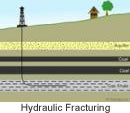
Showing posts with label fracing. Show all posts

Monday, August 13, 2012

Association of American State Geologists Declares Fracking To Be Safe

Could those groups scaring everyone about the dangers to our water supply caused by fracking be exaggerating?  To put it politely, YES.  The Association Of American State Geologists position statement on hydraulic fracturing is as follows:

http://www.stategeologists.org/temp/AASG%20Hydraulic%20Fracturing%20statement.pdf

AASG on Hydraulic Fracturing
August 12, 2012 | Association of American State Geologists“After decades of hydraulic fracturing-related activity there is little evidence if any that hydraulic fracturing itself has contaminated fresh groundwater. No occurrences are known where hydraulic fracturing fluids have moved upward from the zone of fracturing of a horizontal well into the fresh drinking water.” Quoted from the Association of American State Geologists statement.


Hydraulic fracturing as applied in the oil and gas industry (commonly referred to as "fracking," "fracing," or "hydrofracking") is
the process of pumping a mixture of water, sand or similar material, and chemical additives, under high pressure, to create small
interconnecting fractures to increase permeability in targeted subsurface rock formations. Oil and gas companies perform
hydraulic fracturing after a well is drilled, cased and cemented, to increase the well’s productivity. Sand is used to prop open the
fractures, and chemical additives reduce friction, control bacteria, decrease corrosion, and serve other purposes. More than 50
percent of the natural gas, and a growing percentage of the oil, produced in the U.S. comes from hydraulically fractured
reservoirs. The following statement describes hydraulic fracturing in the oil and gas industry, discusses environmental concerns
about the practice and associated activity, and expresses the position of the Association of American State Geologists (AASG).
For an oil or gas well to be productive, hydrocarbons must flow through the rocks in which they are contained (the reservoir) into
the well and to the surface. Much of the oil and gas resource in the U.S. resides in "tight" rock formations, rocks so impermeable
that they do not allow oil and gas to flow easily through the rock to the wellbore. Reservoir rocks are fractured to enhance their
permeability and enable oil and natural gas to flow. Hydraulic fracturing is employed on both traditional vertical wells and on
horizontal wells, which are increasingly common. Most of these wells would not flow at rates that would make the drilling of the
well worthwhile without hydraulic fracturing. The combination of horizontal wells and hydraulic fracturing has led to increasing both
oil and natural gas production and the addition of large new reserves in the United States after years of decline.
Hydraulic fracturing was first used in the oil and gas industry in the U.S. in 1947. Since then, more than one million oil and gas
wells have been hydraulically fractured in the U.S., and hydraulic fracturing has become a common well-stimulation technique.
The application of hydraulic fracturing to horizontally drilled wells uses higher volumes of fluids than more traditional applications.
Today’s accumulated geological and engineering knowledge and improved technology are used to protect public health and the
environment while producing larger volumes of oil and gas. Modern wellbore casing and cementing are designed to isolate
freshwater aquifers from hydraulically fractured oil and gas reservoirs, which are generally thousands of feet below the aquifers.
Casing and cementing are required and regulated by state regulatory agencies and have performed as intended in the oil and
natural gas wells already drilled and currently operating in the U.S.
Environmental impacts are a concern for any activity on or below the land’s surface, including drilling and hydraulically fracturing
an oil or gas well. Constant vigilance is imperative to insure the quality of air, land, and water. Environmental issues raised in
association with hydraulic fracturing and other drilling and production operations include the potential for contamination of fresh
groundwater, water consumption, earthquakes triggered by injecting fluids, venting or flaring methane, and the disposal of fluids.
When they occur, most of these problems are not related to hydraulic fracturing, but to the drilling, casing and cementing of the
well, or disposal of fluids.

After decades of hydraulic fracturing-related activity there is little evidence if any that hydraulic fracturing itself has contaminated
fresh groundwater. No occurrences are known where hydraulic fracturing fluids have moved upward from the zone of fracturing of
a horizontal well into the fresh drinking water. In a single case currently under investigation, contamination may have occurred
when a vertical well was hydraulically fractured in a zone just a few hundred feet below the base of the freshwater. In most cases,
however, freshwater aquifers are near the surface, and are thousands of feet above deeply buried oil- or gas-bearing formations.
Under these geologic conditions, it is highly unlikely that a connection would develop between a hydraulically fractured oil or gas
reservoir and a freshwater aquifer. To further minimize the chance of such a connection, it is important to locate and plug any
abandoned wells that could provide a conduit between reservoir rocks and shallower freshwater aquifers, although no cases are
known where this has led to groundwater contamination from hydraulic fracturing fluids. Contamination has occurred, however,
from spills or mishandling of hydraulic fracturing fluids on the surface. Sound professional and regulatory practices therefore
should be diligently followed when handling fluids on the surface to minimize or eliminate this source of contamination.
Known instances of methane migration associated with well drilling are unrelated to hydraulic fracturing and could occur while
drilling any kind of well. All wells should be carefully cemented and tested properly to avoid methane migration. In some areas,
methane occurs in water wells because there is a natural source of methane within or just beneath the aquifer and in these cases
methane was present in water wells long before drilling or the use of hydraulic fracturing. It is important for oil and gas regulatory
agencies to determine if methane in freshwater wells has increased following drilling activities. This can only be done if baseline
water quality testing is carried out before oil and gas drilling. Also, enhanced practices and regulations may be required to
minimize release of methane, a greenhouse gas, to the atmosphere.

Introduction

The Association of American State Geologists (AASG) represents the State Geologists of the
50 United States and Puerto Rico. Founded in 1908, AASG seeks to advance the science
and practical application of geology and related earth sciences in the United States and its
territories, commonwealths, and possessions.

www.stategeologists.org

AASG statement

State geological surveys are important sources of information and expertise related to subsurface geology, water resources, and
energy. AASG members regularly monitor and discuss issues related to hydraulic fracturing. Several state surveys have been
engaged in investigations of potential freshwater contamination that may have been caused by recent hydraulic fracturing-related
activities; others are undertaking research on, and providing information about, hydraulic fracturing. The following points constitute
AASG’s position on hydraulic fracturing:
• AASG advocates that comprehensive public information based on sound science and open processes be utilized when
formulating energy and environmental policy. We encourage a balanced, independent, fact-based analysis of controversies
regarding natural resource development.
• AASG supports and encourages the disclosure of hydraulic fracturing fluids and chemical additives on FracFocus, the
hydraulic fracturing chemical registry website, developed by the Interstate Oil and Gas Compact Commission (IOGCC) and the
Groundwater Protection Council (GWPC).
• AASG advocates for better understanding and scientific documentation of our subsurface geology and aquifers, which will
result in improved geologic models to help all parties avoid problems that might occur during drilling and hydraulic fracturing
activities of oil or gas reservoirs, especially in new fields. This will allow safer and enhanced production of oil and gas.
• AASG is committed to protecting the nation’s public safety and the natural environment, including groundwater and
surface-water resources. AASG supports the wise and prudent production of oil and gas resources to help fulfill the nation’s
energy needs.
• AASG recognizes the economic and social importance, and the abundance, of oil and gas resources that only can be
recovered if reservoir rocks are hydraulically fractured.
• AASG maintains that state oil and gas regulatory agencies are best equipped, through statutory authority, expertise, and
experience, to ensure that hydraulic fracturing and all other operations associated with oil and natural gas development
proceed in a manner that protects the natural environment, including public safety as well as groundwater and surface-water
resources.
• AASG recognizes that the environmental record of hydraulic fracturing activities over the past 60 years has been
overwhelmingly positive. AASG also maintains that operators who do not follow regulatory requirements should be
appropriately sanctioned and, where appropriate, barred from conducting further oil and gas operations.
• AASG notes that geologic data generally show a significant vertical separation between most oil and natural gas reservoirs
targeted for hydraulic fracturing and the shallower freshwater aquifers. In areas where targets of hydraulic fracturing are
comparatively close to freshwater aquifers, thorough geologic characterization of the area is warranted and even greater
caution should be exercised by operators and regulatory agencies.
• AASG recognizes the fast pace of recent drilling for oil and natural gas and the associated hydraulic fracturing activities. AASG
suggests that caution and careful attention to community relations be exercised by operators, contractors, and regulators in the
design, review, approval, documentation, implementation, and verification of plans for the drilling, completion, stimulation and
production of oil and gas wells.
• AASG encourages continuing work to acquire and maintain local pre-drilling water quality assessment and ongoing information
on groundwater quality, and recommends that casing and cementing operations in hydraulically fractured wells be carefully
documented by operators, contractors, and regulators.
Water used for hydraulic fracturing is generally obtained from nearby water wells, lakes, streams and rivers. Although a
substantial amount of water is used in hydraulic fracturing, this represents a one-time use, and the amount is considerably less
than the volumes required in other common ongoing uses, such as agriculture, municipal supplies, and industrial processes. Oil
and gas operators must follow state laws in the acquisition and use of water and make sure that they do not negatively impact
local (individual, city, or county) water supplies. The industry is working to reduce their freshwater needs, including recycling the
water they use in hydraulic fracturing operations.
Much of the water used in hydraulic fracturing flows from the well along with gas, oil, and saline water during normal production
operations. That "wastewater," or “flow-back water," must be recycled or disposed of properly. Disposal is generally through deep
wells drilled specifically for that purpose. In some locations, injecting returned water into deep wells has triggered small earthquakes
(generally less than Magnitude 3.0), a phenomenon called triggered seismicity or induced seismicity. Proper well siting
away from faults and using managed injection rates and pressures can minimize or eliminate triggered seismicity.
With new technologies, exploration has expanded into areas and communities that have seen little oil and gas drilling, or have
not seen it recently. That has created a variety of new issues--some positive, some negative. Caution, good judgment, and sound
regulatory practices must be exercised in areas where less information is available about the subsurface geology.

Co-Chairs, Energy Committee Co-Chairs, Environmental Policy Committee

Scott W. Tinker Nick Tew Karl Muessig David K. Norman
scott.tinker@beg.utexas.edu ntew@gsa.state.al.us karl.muessig@dep.state.nj.us dave.norman@dnr.wa.gov
Texas State Geologist Alabama State Geologist New Jersey Geological Survey WA Div. of Geology and Earth Resources

Thursday, August 2, 2012

Conserving Water While Fracing

The following link will take you to an excellent article about how fracing is being done with minimal water usage, simply by recycling .  Anyone who has a swimming pool knows the water is kept clean by removing debris like leaves and grass, regularly using  chemicals to kill bacteria and algae, (mainly chlorine), and continually filtering the water.  Basically, the same thing can be done with the water used to frac oil and gas wells.    It may not be "rocket science", but it works, it is safe, and it greatly reduces the amount of water used.  That you can take to the bank and use as one more  weapon against the opponents of fracing.
Peter

Water Demands Spark Improved Technology For Fracing
The fracing industry has long considered water a nuisance. But water reclamation and treatment companies see H2O as liquid gold, and the technologies they bring to the game will play a pivotal role in the shale boom.


Wednesday, October 7, 2009

Scare Tactics About Fracing Gas Wells

Companies have been fracing oil and gas wells for decades with almost no danger to near surface groundwater aquifers. Wells are carefully drilled through these zones and steel casing is set and cemented in place to protect the acquifer. Most, if not all hydraulic fracturing is done thousands of feet below these acquifers and it is near impossible for the frac fluid to get into the groundwater. Do a search on this blog about "fracing" or "hydraulic fracturing".

As with the man-caused global warming myth, people opposed to drilling use the fear tactic of "polluted drinking water" to sway public opinion. Generating fear has become the standard operating procedure for environmental groups, and they are totally shameless about their lies. Think of drowning polar bears, melting glaciers, rising sea levels, monster hurricanes, etc.; all nonsense of course, but such images influence the opinion of uneducated people and politicians.
Peter

Thursday, August 27, 2009

The Government Wants to Regulate and Control Hydraulic Fracturing

The process of hydraulically fracturing (fracing) rocks deeply under ground to increase the production or recovery of oil and gas has been done for many decades, with few problems. Do a search on this site to find more information about how this is done and the environmental concerns.
Peter


NAPE: Frac regulation Washington's 'worst threat'

By OGJ editors
HOUSTON, Aug. 26
-- A move to regulate hydraulic fracturing federally is the “biggest threat our industry has ever seen in Washington,” Bruce Vincent, vice-chairman of the Independent Petroleum Association of America, said Aug. 26.

Joel Noyes, IPAA director of government relations and industry affairs, expressed a low expectation for passage of most of the Obama administrations frenzied agenda, much of which contains negative provisions for oil and gas producers.

The atmosphere in Washington is one of “almost chaos,” said Noyes, and the environment is very partisan. The agenda is so congested because of the Democratic desire to push contentious legislation through before the 2010 election year, he said.

Ninety percent of wells are hydraulically fractured, some dozens of times, Vincent told the Summer NAPE E&P Forum in Houston. In the 60 years that the industry has been fracturing wells under state regulation, no case of fresh water contamination by the procedure has been documented, he said (OGJ Online, July 2, 2009).

Greater frac regulation is coming, predicted William Coates, president, Schlumberger Oilfield Services North America. The question is whether the industry can manage enough input that final rules are formed in a cooperative manner, he said.

Friday, July 17, 2009

Haynesville Shale Gas Play Continues With Positive Results

Operators in the Haynesville Shale Gas Play have reduced their drilling activity "until drilling and completion costs are reduced to acceptable levels". What is acceptable? I seems to me these costs are fairly inflexible. These wells are expensive and cutting costs can be dangerous and counter-productive. What really is needed is higher natural gas prices. My guess is the price will increase when demand increases.
Peter

Haynesville well results encourage operators


By OGJ editors (source)
HOUSTON, July 15
-- Forest Oil Corp., Denver, and Goodrich Petroleum Corp., Houston, reported results from recent Jurassic Haynesville horizontal well completions in Louisiana and East Texas.

Forest, meanwhile, said it operated only four rigs in this year’s second quarter and continues to defer significant investments until drilling and completion costs are reduced to acceptable levels to support a larger drilling program at current natural gas prices.

In Red River Parish, La., the Driver 13-1H well produced into a sales line at 20.3 MMcfd of gas equivalent with 6,500 psi flowing casing pressure in early July. It had 10 frac stages in a 3,500-ft horizontal leg and cost $9 million.

Forest has identified 110 potential horizontal locations on the 11,050 Haynesville prospective net acres it holds in Louisiana. It will maintain a one-rig program in the parish for the rest of 2009 and one rig in other prospective areas of the play in Texas and Louisiana.

Goodrich Petroleum said the Taylor Sealey-3H in Panola County, Tex., produced at 9.3 MMcfd with 5,200 psi on a 24/64-in. choke. It is in Minden field 6 miles south of the Lutheran Church-5H well that had an initial rate of 9 MMcfd. The company has 100% working interest.

The company reached total depth at two other Haynesville shale horizontal wells, T. Swiley-4H in Minden field and Beard Taylor-1H in Beckville field.

Goodrich Petroleum also held interests in three wells completed by Chesapeake Energy Corp. in Bethany-Longstreet field, Caddo and DeSoto Parishes, La.

Initial rates were 12.5 MMcfd with 7,800 psi on an 18/64-in. choke at Johnson 32H-1, Goodrich 31%; 15.4 MMcfd with 6,100 psi on a 22/64-in. choke at Wallace 36H-1, Goodrich 22%; and 14 MMcfd with 4,000 psi on a 22/64-in. choke at the Bryan 25H-1, Goodrich 13%.

Friday, June 19, 2009

How Wells Are Drilled Horizontally

The following is a simplified but good explanation of how oil and gas wells start drilling vertically and are then gradually turned in a desired direction. They then "build angle" with 0 degrees being vertical and 90 degrees being horizontal. This ability to drill horizontally, then fracture the rocks, and hold the fractures open with propant (sand or glass beads), is what allows these low permeability shales to produce economic quantities of gas and oil.

The source of this article is here: http://www.energyindustryphotos.com/how_oil_and_gas_wells_are_drille.htm

Peter

How Oil And Gas Wells Are Drilled Horizontally

Today's oil companies now have the ability to drill wells sideways, to reach specific pockets of oil and gas or "targets" which may be beneath cities or environmentally sensitive area where a rig cannot be set up. Multiple wells can be drilled from one pad site on land or from an offshore platform, reducing costs and the environmental impact of oil and gas exploration.

Horizontal drilling techniques are also used to expose more surface area of oil bearing rock so that the overall production of the well is increased in either a new well or old well that has been producing for some time.

You may be asking yourself, how do you get heavy, rigid drill pipe to turn and go sideways? The truth is that when so much pipe is strung together it does flex, enabling the hole to be drilled at up to a 90 degree inclination in any direction and out to a thousand feet or more horizontally from the vertical hole. The assembly that does the drilling is made up of several parts. They include the following:

Mud Motor Illustration of a Mud Motor as Used In Horizontal Oil and Gas Wells

A directional assembly (parts that make up the drill string that the rig lowers into the hole to drill the well) consists of a "mud motor" which is a machine that contains a rotor and stator inside it which are turned by the force of the drilling fluid or "mud" that is pumped down the drill pipe. This motor turns the drill bit so instead of turning the entire length of drill pipe, the motor, which is bent at a certain angle, can remain in a fixed position drilling the hole in whatever direction the bend of the motor is aimed toward.

MWD MWD tool on the surface. (Is lowered into a special section of drill pipe or " Monel collar" which is non magnetic.

A probe full of instruments is placed inside a nonmagnetic length of drill pipe just above the mud motor to show the driller on the surface which direction he is drilling in and at what angle or inclination he is heading. This instrument is an MWD or "Measure While Drilling" probe. It typically consists of instruments that measure inclination utilizing accelerometers, and instruments that measure azimuth or compass heading using magnetometers. This information is sent via a series of pressure pulses in the column of drilling fluid flowing down to the bit from pumps on the surface. At the surface a device called a transducer picks up these increases in pressure (similar to Morse code signals) and they are decoded by surface equipment in the MWD company's mobile lab that is placed on deck of the offshore rig, or near a the rig on land. This equipment is connected to a display on the rig floor where the driller can see which way the bent motor is sliding.

The directional driller can then turn the entire length of drill pipe ever so slightly in the direction he wants the well to go and the motor which is being turned by the flow of drilling mud coming down the drill pipe causes the bit to chew away at the rock and drill ahead. MWD equipment can also be combined with sensors that record gamma rays given off from the rock formations below, instruments that measure resistivity and conductivity, etc. This is known as "logging while drilling" or LWD. It enables the oil company geologists to see if they are staying in, or have reached, the oil or gas bearing zones in real time instead of having to pull all the drill pipe out of the hole and run a wireline based logging tool down the hole.

Enhanced Recovery

The ability of oil companies to drill horizontally is being used in fields that have been depleted to the point where very little oil or gas is flowing into the original vertical well and to drill multiple horizontal wells from the same offshore platform to a pocket of oil or gas as seen in the illustration below. See What is Enhanced Oil Recovery?

Illustration of an Offshore Horizontal Oil Well from a Drilling Platform

In a well that was originally drilled vertically in the past and is not producing as much as it once was, a "re-entry" will be done whereby a device called a whipstock is lowered and fixed at a certain depth.

A special bit or "mill" is used at the end of the regular drill pipe, deflected into the side of the casing by the whipstock to cut a hole in the heavy metal casing and out the side of the well. This is done somewhere just above the productive formation. Then, after this "window" has been cut the rig will pull the milling bit out of the hole and then lower the directional assembly consisting of the mud motor and MWD equipment down into the hole and begin to drill a horizontal hole. Horizontal drilling techniques are being used in a variety of rock formations including the Barnett Shale of Texas - Oklahoma, and the Bakken Formation in North Dakota and Canada. In the Barnett Shale and Marcellus Formation for example, horizontal wells can extract the very low volume of gas given off by the dense shale. In the past such formations of low porosity had been passed over and considered not economically viable with vertical wells. Now large areas of the United States are being opened up to natural gas exploration in shale and limestone formations of low porosity. These dense formations are drilled with horizontal drilling methods and then "fracked" with high pressure water to create more fissures that will allow gas to escape from the rock into the wellbore. Coal bed methane, or natural gas can be extracted from coal seams too deep to mine using horizontal drilling techniques.

Recent Advances In Technology

New techniques to drill wells horizontally are being developed all the time. One such technique is called "Rotary Steerable". With this system the entire drill string can be rotated, enabling faster penetration and quicker drilling of the well. It utilizes the same components, MWD and a mud motor, but it is a very specialized type of mud motor that has kick pads that orient the drill bit in the right angled direction instead of using a bent mud motor.

Leaders in the industry include companies such as Weatherford, Halliburton (Sperry Sun), Pathfinder Energy Services, Schlumberger and Baker Hughes.

The YouTube video below, while without sound, illustrates the drilling of a hypothetical horizontal well. It shows first the drilling of a horizontal hole, drilling the "curve" of the well with directional equipment, pulling out to cement in a "liner" or casing to protect the upper layers of the well bore, then drilling out of this casing again into rock horizontally and finally set the production casing. (click on the following link to see the video on youtube)

http://www.youtube.com/watch?v=Y37XbMEDnXc&eurl=http%3A%2F%2Fwww%2Eenergyindustryphotos%2Ecom%2Fhow%5Foil%5Fand%5Fgas%5Fwells%5Fare%5Fdrille%2Ehtm&feature=player_embedded


While these explanations are simplified I hope that they give the reader some idea of how this technology works. As the world requires more and more oil and gas new advances in drilling technology are being developed to work in deeper holes, hotter temperature zones and pressures.

Basics Of Horizontal Drilling

For more information on how oil wells are drilled the two books that I recommend the most are The Nontechnical Guide To Petroleum Geology, Exploration, Drilling and Production and A Primer Of Oilwell Drilling by Ron Baker. Both used by many colleges and technical schools as well as Oilfield Service companies in their training programs. For production only try Oil and Gas Production In Nontechnical Language. Drilling Technology In Nontechnical Language

is a lower cost alternative to "A Primer Of Oilwell Drilling". All can be found in The Oilfield Bookstore,

For More Information on any of these books and customer reviews click on the book covers below...


Nontechnical Guide to Petroleum Geology, Exploration, Drilling and Production (2nd Edition) Oil & Gas Production in Nontechnical Language

Tuesday, June 9, 2009

More Good News From Washington

Let us hope that Congress listens to the following message from The Ground Water Protection Council. The nations ground water resources are adequately protected. We do not need more oversight on the oil and gas industry from Washington.

The oil and gas industry has always tried to protect usable ground water reservoirs from damage during the drilling and production of wells. Historically this process is regulated by individual States, which makes sense because each area is different geologicaly and culturaly.

There is a proposal in Congress for the drilling and hydraulic fracturing (fracing) of wells to be controlled and regulated at the Federal Level, through the Enviromental Protection Agency (EPA). This would only confuse the issue, add unnecessary cost, harm the economy, and take control away from the local (State) level. Of course there are some who think Washington should control everything, but let us hope that wiser heads prevail.
Peter

GWPC: US state regulations adequately protect water resources


Nick Snow
Washington Editor (source) The Oil and Gas Journal

WASHINGTON, DC, May 31 -- Current US state oil and gas regulations adequately protect water resources, the Ground Water Protection Council said in a new report on May 28.

The assertion by one of the nation's leading groundwater protection organizations came as congressional discussions intensified on giving the US Environmental Protection Agency authority to regulate hydraulic fracturing, an essential part of producing natural gas from shale formations.

The study focused on eight regulatory aspects: permitting, well construction, hydraulic fracturing, temporary abandonment, well plugging, tanks, pits, and waste handling and spills. The resulting report was not intended as an evaluation of state programs, but rather, an evaluation of state programs, the GWPC said. (?????? Peter)

Each state covered in the study was invited to review the report's findings and provide any updated information, it added. Thirteen states provided responses, which were incorporated in the report, the council said.

GWPC also produced a regulations reference document containing excerpts from each state's oil and gas regulations related to the programmatic areas evaluated in the study, it said.

Oil from Canada's oil sands is also blended, without segregation, with other feedstocks at many US refineries, making it impossible to determine the content of fuels that are purchased, it added. The report and addendums are available online at www.gwpc.org.

Oil and gas organizations responded favorably. "The study confirms what the industry has been saying: Regulation of oil and gas field activities, including hydraulic fracturing, is best accomplished at the state level where regional and local conditions are best understood, and where state regulators are on hand to conduct inspections and oversee specific applications like well construction and testing and plugging as well as hydraulic fracturing," the American Petroleum Institute said in a statement.

"Hydraulic fracturing is a tried-and-true, more than 50-year-old technology, increasingly essential for producing the nation's natural gas," it added.

Saturday, June 6, 2009

Hydraulic Fracturing To Produce Shale Gas

http://all-llc.com/shale/GWPCMarcellusFinal.pdf

Federal Government Regulation of Fracing Shale Gas Wells?

This is an issue worth following. I imagine the average person can be quite alarmed at the idea of an oil and gas company pumping enough water and chemicals into the Earth to fracture rocks enough to produce oil and gas. This technique is referred to in the industry as "fracing" and it is a common practice, but as its use spreads more people are becoming aware of it.

The question here is do we really need Federal regulation of the process of fracing? The states already regulate this activity and it has not been a problem. Why is there this sudden concern now? Is it part of a larger overall plan to hamper oil and gas production? Aren't we trying to limit our dependence on foreign oil and gas?
Peter

House Natural Resources Committee hearing testimony on shale gas drilling today

9:01 AM Thu, Jun 04, 2009
Dave Michaels/Reporter (source)

A hearing of the House Natural Resources Committee this morning will focus on the art of hydraulic fracturing and, more broadly, shale gas production. Some Democrats, including Rep. Diana DeGette of Colorado, have charged that hydraulic fracturing can cause groundwater contamination and should be regulated by the Environmental Protection Agency. (Gas drilling is currently regulated by state agencies.) A couple weeks ago, EPA Administrator Lisa Jackson suggested her agency might reexamine the impact of drilling on drinking water. This further spooked the industry.

Even though DeGette has yet to introduce her bill, the industry has launched a preemptive strike with a coalition called Energy in Depth. Its case got a boost last week, when a report by the Ground Water Protection Council said state regulation was adequate. There are no known cases of contamination due to gas drilling in Texas, according to the Texas Railroad Commission and the Texas Groundwater Protection Committee.

The witnesses include Douglas Duncan of the U.S. Geological Survey; Scott Kell of the Groundwater Protection Council; and Mike John of Chesapeake Energy, a major player in the Barnett Shale. You can watch the hearing here

Monday, May 25, 2009

Optimism Over The Marcellus Shale

In these difficult times, it is encouraging to read some positive economic news. Here we have an example of people doing what Americans do best, using creativity, new technology, and persistance to produce a valuable product where none existed before.

In this case, people are producing large amounts of natural gas from a thick and widespread layer of rock called the Marcellus Shale in the northeastern United States. The Marcellus Shale has been known for over 100 years to contain gas, but it is only recently that operators have found a way to coax this gas out of the ground in enough volume to be of interest. And it is attracting a lot of interest. Search this blog for many more articles about the Marcellus Shale and how it is being developed.
Peter

Marcellus Shale results have National Fuel happy

NEWS BUSINESS REPORTER (source)

National Fuel Gas Co. executives said they are encouraged by the early results from a new well that the company and its joint venture partner drilled in a potentially lucrative region of Pennsylvania.

The new well, drilled as part of its joint venture with EOG Resources, is producing more than 3 million cubic feet of natural gas a day in its early days of production, National Fuel executives said.

That production rate is nearly nine times the initial production rate of the joint venture’s first well, which was drilled last year and yielded a disappointing gas flow because of an inefficient job fracturing the rock to release the gas.

In all, the joint venture has drilled and completed initial tests on four wells on land it controls in the Marcellus Shale in Pennsylvania. The latest well’s initial production is double the highest initial yield of any of the three other wells the joint venture has drilled.

“This flow test confirms our expectations for the potential of our Marcellus Shale position,” said Matthew D. Cabell, who runs National Fuel’s oil and natural gas drilling business.

National Fuel has drilling rights on 720,000 acres of land in northwestern Pennsylvania that covers the Marcellus Shale, a geological formation that many experts believe holds vast amounts of natural gas. That gas previously went untapped, until the launch of new drilling techniques that allow the well to be drilled vertically and then horizontally, unlike a traditional well that goes straight down.

Within two years, National Fuel believes the high-yielding Marcellus wells could produce between 30 million and 40 million cubic feet of gas per day. The joint venture is completing work on two other wells. National Fuel’s own drilling program in the region calls for 10 vertical wells and two to three horizontal wells to be drilled this year.

National Fuel also spending up to $30 million build a small-scale pipeline system that will run for about 30 miles through in Tioga and Lycoming counties in Pennsylvania to gather the gas produced at the new Marcellus wells and bring it to nearby higher-capacity pipelines that can access major U. S. markets.

Friday, April 24, 2009

Horn River Shale Gas Play In NE British Columbia Going Strong

The economics of gas wells in the Horn River Shale of northeastern British Columbia, Canada must be excellent. Why? Imagine the cost of bringing in rigs and equipment to this remote area, with its harsh climate and lack of supporting infrastructure. Gas produced from shale, via horizontal drilling and constantly improving hydraulic fracturing technology are key elements to this success.
Peter

Horn River drilling, gas plant take shape
By OGJ editors HOUSTON, Apr. 22 -- (source)

EnCana Corp., Calgary, and its partner Apache Corp., Houston, have adopted a more efficient way to develop gas in the Horn River basin shales of Northeast British Columbia, EnCana said.

The companies hope to be able to drill fewer wells by increasing the number of fracs per horizontal leg to as many as 14 from the eight initially planned.

The companies will drill 12 wells in 2009, down from 20 originally planned.

EnCana is to build the Cabin gas processing plant 60 km northeast of Fort Nelson, BC, on behalf of industry co-owners that are major landholders in the basin. Its first phase is due in service in the third quarter of 2011. Initial capacity is 400 MMcfd, and the plant will be expanded in stages as the basin's gas production grows.

Friday, April 3, 2009

Marcellus Shale Gas Play: Part 3

The potential economic impact of the Marcellus Shale gas play is very significant, all the more so because of the current local, national, and global economic "recession". There is much talk, and activity concerning energy supplies, energy independence, carbon dioxide emissions as a cause of global warming and climate change, the environment, jobs, and taxes and of the economy. This makes the following discussion about the Marcellus Shale Gas Play all that much more important.

If our governmental leaders truly want to restore the American economy to health and vigor, they should do everything possible to encourage the development of the Marcellus Shale Gas Play.
Peter

Experience in Other States
Several other states have significant experience
with deep natural gas drilling, including Texas
and Wyoming. The experience in those states and
the more comprehensive time frame of activity
is a helpful indicator of the potential impact in
Pennsylvania and suggests the types of issues local
officials should be considering.

Experience in North Texas
The Barnett shale play in northern Texas, around the
Dallas/Fort Worth area, is very similar in geology
to the Marcellus, making it a good indication of
technological and industry needs
. Since the development
of the Barnett shale started in earnest in 2001,
employment and income impacts have been documented.

In 2008, the Perryman Group, a Texas-based
economic consulting group, conducted an economic
impact study of activity in the Barnett shale on Fort
Worth and the surrounding area. At the time of the
Perryman analysis, there were a total of 7,170 gas
wells across the Barnett shale region, 541 of them
within the Fort Worth city limits. Their findings should
help illustrate potential impacts in Pennsylvania.

The analysis includes an industry-by-industry
estimate for impacts on the gross product, permanent
income, and permanent jobs. The Perryman analysis is
specific to the local economy surrounding Fort Worth,
so the properties and numbers cannot be applied
directly to Pennsylvania. Extrapolating to Pennsylvania
is also particularly difficult because the oil
and natural gas sector and supporting infrastructure are
not as fully developed in some of the rural areas with
the Marcellus shale, therefore much of the economic
activity, at least initially, will have to be conducted
by firms and employees located outside the region,
which will lessen the local economic impact. Yet the
Perryman analysis does provide useful indications of
the general impacts that could be expected and which
Pennsylvania policy makers should consider.

Gas well frac job, showing some of the massive equipment used.

Overall Economic Impact
Overall, the Perryman Group report estimates that
Barnett shale accounts for $8.2 billion in annual
output (8.1 percent of total output in the regional
economy) and 83,823 jobs (8.9 percent of total jobs).


This is a significant number, particularly because the
Barnett shale region is predominantly an urban area
that already boasts a large and extensive economy.
In addition, experts suggest that the stability of the
natural gas economy has essentially shielded the
region from economic downturns. Potential impacts
in areas of Pennsylvania could be much higher on a
percentage basis considering that the local economy
is relatively smaller.

Where the Jobs and Income Are
As with most economic activity, the impacts of
natural gas affect more than just the specific firms
directly involved in the industry. There are also
important employment and income effects on local
businesses that supply the industry (such as oil field
service companies, local contractors, area surveyors,
attorneys, and local fuel and stone suppliers) and
effects that result from employees spending their
wages locally (local retailers and restaurants).

Leasing and royalty income, which is currently
of much interest in Pennsylvania, actually accounts
for a very small share of the economic impact. The
Perryman report identifies three separate types of
economic activities related to natural gas and outlines
their share of economic activity, including:

1. Exploration, drilling, and operations (67 percent
gross product, 62 percent personal income)

2. Leasing and royalties that go to landowners
(11 percent gross product, 12 percent personal
income)

3. Pipeline infrastructure (22 percent gross product,
27 percent personal income)

The employment impacts related to natural gas in
the Perryman report show similar trends:


1. Exploration, drilling, and operations (58 percent
of new permanent jobs)

2. Royalty and lease payments (14 percent)

3. Pipeline infrastructure (28 percent)

As the industry expands within Pennsylvania
more of these jobs and revenues should be reaching
local residents, either as new hires or as the industry
employees relocate to the region. Communities can
increase the possible economic benefits of a growing
natural gas industry by planning ahead to respond to
the growing population within their areas.

Which Industries Benefit
As expected, the industrial sector with the largest
gain from the Barnett shale is the crude petroleum
and natural gas industry, accounting for about one fifth
(21 percent) of increases in personal income
and 7 percent of new jobs. Retail trade accounts for
about 16 percent of increased personal income and
27 percent of the new jobs, while new construction
accounts for 10 percent of increased personal income
and 9 percent of new jobs. Eating and drinking
establishments similarly benefit, accounting for 5
percent of personal income and 15 percent of new
employment.

For any individual industry the difference between
their impact on gross product and on employment
partially reflects wages and salaries within that
industry. Retail trade and dining establishments,
for example, together account for 21 percent of
new personal income but 42 percent of total new
employment, reflecting that many such jobs are relatively
low paying.

Experience in Sublette County, Wyoming
Sublette County is the largest gas-producing county
in Wyoming, accounting for 44 percent of the state’s
gas production in 2006. Unlike the North Texas play,
Sublette County is a very rural area with a population
of only 5,920 in 2000. The small population size
means that the impacts of natural gas development are
much more apparent than those of the Barnett shale.

Studies in the county have demonstrated that
gas exploration and drilling has had a direct and
significant influence on the county’s population,
affecting almost all sectors of the community,
including housing construction, the demand for
public services, and culture.

They found that much of
the oil and gas employment was transient (not local
citizens). For example, during development of the gas
fields, a little over half (53 percent) of the workers
were living in camps or motels. Housing needs have
proved to be a constraint on local hiring because
the high cost of living and saturated housing market
inhibits new employees from finding places to live.
Reports found that the availability of housing unmistakably
affects nonresident workers’ desire to move
into the county.

A wage and salary study in the county also found
that the highest paying jobs are gas field jobs, which
generate significant opportunities for employees. This
also creates challenges for existing businesses, which
must pay higher wages to keep their existing workers.
The gas field jobs offer nearly unlimited opportunity
for overtime along with substantial opportunities
for wage advancement. Seasonal fluctuations in
employment and unemployment have effectively
stopped due to the continuous nature of the gas
industry.

Natural gas drilling has had significant effects on
the local governments and school districts as well.
Due to the population increase, including a dramatic
increase in the number of school students, the county
government and schools have acquired major infrastructure
expenses. In addition to increased costs of
municipal infrastructure, the nonviolent crime rate
has increased in Sublette County, particularly for
driving under the influence, drug possession, and
larceny.

The Marcellus Shale Gas Play: Part 2

The following is continued from the article prepared by Penn State University and explains the Marcellus Shale Gas Play.
Peter


The Marcellus Shale
The Marcellus shale is a deep layer of rock that
lies 5,000 to 9,000 feet underground and runs from
the southern tier of New York through the western
portion of Pennsylvania, into the eastern half of
Ohio, and through West Virginia.
In Pennsylvania,
the formation extends from the Appalachian plateau
into the western valley and ridge. While this area has
produced natural gas for years, many gas production
companies are now interested in the Marcellus shale
because of higher energy prices and new drilling
technologies that could recover an estimated 50
trillion cubic feet of natural gas.
Conservative
estimates state that the Marcellus shale contains 168
trillion cubic feet of natural gas; in reality, it could

contain as much as 516 trillion cubic
feet.
The United States currently
produces roughly 30 trillion cubic feet
of gas a year and demand for this gas
is increasing steadily.

Typical drilling rig and pipe used to drill a deep and long horizontal well.

Where and How Does Drilling
Take Place?
Natural fractures in the Marcellus
shale are important to recovering large
amounts of gas. As heavily organic
sediments were deposited 380 million
years ago, the black shale that makes
up the Marcellus was formed. As the
organic material decayed, methane
and other components of natural gas
formed and are now trapped tightly
in the dense shale.


About 300 million
years ago the pressure of the gas
caused fractures in the formation.
These fractures run as slices from the
northeast to the southwest and are
fairly close together.
While a vertical
well may cross one of these fractures and other
possibly less productive fractures, new technology
allows for horizontal drilling, which crosses a series of
fractures and may be more productive.


Gas wells are drilled in locations where a gas
company has obtained the right to explore for and
develop natural gas. Wells are spaced according
to mineral laws and regulations, with the goal of
extracting gas efficiently using as few wells as
possible.


Geologists and geophysicists working
for gas companies use seismic data to interpret the
formations of rock layers underground. If seismic data
suggest a reasonable possibility of efficient gas access,
a well will be drilled in a specific location using long
sections of drill pipe. Depending on the geology, the
drillers may drill vertically for several thousand feet
and then use special joints to turn the shaft 90 degrees
over the course of several hundred feet and continue
drilling horizontally for an additional distance of
up to 5,000 feet.


A steel casing is cemented in place
to stabilize the surface of the well bore and protect
groundwater resources. Horizontal drilling enables
companies to extract more gas in a cost-effective
manner. In many cases, multiple wells may be drilled
side by side on the same well pad, radiating out in
different directions.


Natural Gas Well Development
Development of an individual natural gas well site
typically follows this basic timeline, though it may
vary somewhat at any one site. The stages include:


1. Leasing activity, during which land is put under
contract and secured for natural gas exploration
and development. This stage normally lasts four
to six months.


2. Exploration and seismic testing, which is done to
find the areas that will offer the highest potential
natural gas yields. Exploration and seismic testing
typically last about four months.


3. Site preparation and drilling stage, including earth
moving, road grading, and well pad construction
as well as drilling and fracing. This stage lasts
from four to eight weeks. Pipeline is laid to
connect the well to feeder pipelines, allowing the
gas to reach market.


4. Site reclamation activities, during which stage
the active well site is stabilized and vegetation
is established. Site reclamation lasts about two
weeks.


5. Extraction and transport of natural gas from the
well, which can potentially last from five to thirty
years (depending on the productivity of that individual
well). Wells receive active maintenance
throughout their lifespan, which means ongoing
access is required. In addition, it is possible
that the well may be refraced at some later date,
temporarily bringing back much of the equipment.


6. Closure plan, a procedure that is influenced by
the landowner’s leasing terms, during which the
inactive well is closed and the site restored.
When their role on an individual site is completed,
the different crews typically move to a new well site
nearby to do site prep and drilling. Thus, within any
one community at any one time, there will be well
sites in different stages of development.


Why Marcellus Is Different from Shallow Wells
The gas produced from deep well drilling is under a
higher pressure than in shallow or traditional wells
,
which necessitates different handling techniques and
equipment. Unlike shallow wells with natural gas
reserves, gas derived from the Marcellus shale is held
tightly within the shale so the method of extraction
is quite different.


Current technology uses significant
quantities of water under very high pressure to
fracture (frac) the shale.
Due to the fact that wells are

horizontally drilled to access more shale, the amount
of water required for fracing these wells is significant,
between one and five million gallons or more per
well. This quantity of water required for fracing may
contribute to a significant number of issues in affected
communities.

Friday, March 27, 2009

A World-Wide Opportunity -- "Unconventional Gas"

Any geologist following the recent activity in so-called "unconventional gas" plays in the United States, particularly the "shale gas" plays using horizontal drilling technology and modern staged fracturing methods, knows there is potential for the same development in sedimentary basins all around the world. The following article indicates some people are beginning to realize the significance of these developments.
Peter


UGI: Unconventional gas wealth seen in world's basins
G. Alan Petzet Chief Editor-Exploration (Oil and Gas Journal) source
FORT WORTH, Sept. 30 -- Sedimentary basins in the US appear to contain a volume of technically recoverable unconventional gas that is 10 times the ultimately recoverable volume of conventional gas.

All resources are logarithmically distributed in nature, and the lower quality deposits need more expenditures and better technology to develop economically, Stephen A. Holditch of Texas A&M University told the opening session of Oil & Gas Journal's Unconventional Gas International Conference & Exhibition in Fort Worth Sept. 30.

Results of the studies of eight US basins are being configured into software that can be used as advisory points as operators begin to drill, complete, stimulate, and produce shale, tight sands, and coalbed gas reservoirs outside North America, where almost all of this type of drilling has occurred so far, Holditch said.

Based on the findings, which imply that vast quantities of gas can be produced in the world's basins, even Saudi Arabia's state oil company Saudi Aramco has started a tight gas sands research group, Holditch said. Holditch and a large group of his students plan to release more details of the still incomplete findings at a Society of Petroleum Engineers conference in Pittsburgh in mid-October.

C. Michael Ming, president, Research Partnership to Secure Energy for America (RPSEA), noted the importance of basic research into unconventional gas recovery technology. Partly due to such research, which is under constant threat of reduced federal and other funding, the US has more gas reserves today than when former US President Jimmy Carter made his "moral equivalent of war" (meow) speech in the midst of the late 1970s energy crisis, Ming told the conference.

World gas studyHolditch's students, who compared conventional and unconventional gas statistics from eight US basins, plan to expand the study to 25 basins.
The information covered petroleum systems descriptions and other public data on the San Juan, Green River, Powder River, Uinta-Piceance, Black Warrior, Wind River, and Illinois basins. Data came from the National Petroleum Council, US Geological Survey, Energy Information Administration, Gas Research-Gas Technology Institute, Potential Gas Committee, and other sources.

When looking at a given target basin or formation anywhere in the world, we can find the analogous basin or formation in the US and glean from published case histories that abound in the literature what amount to the best practices for recovery of unconventional gas, Holditch said.

The system, still a work in progress, is advisory in nature and not an expert system, he cautioned. Unconventional oil reservoirs have not yet been considered.
Part of the current study, for example, lists US basins and ranks world basins by most analogous, second most analogous, and so on. The software would eventually help operating companies, service companies, and others to select a tight gas sand fracturing fluid, for instance, using defaults and best practices from similar US reservoirs as a starting point, Holditch said.

Need for research
Carter delivered the "meow" speech about the same time that Houston wildcatter George Mitchell "decided to take a stab" at producing gas from the Barnett shale, Ming recalled.

Noting that the drilling, completion, and stimulation procedures for each shale must be uniquely decoded, Ming said that operators are still improving Barnett shale gas recovery factors. Some of the improvement can be laid to iterative actions, but with concentrated research, the process might become more predictive, he postulated.

The positive contributions from projects such as DeepStar, Norway's DEMO2000, and Brazil's deepwater program demonstrate that what begins as pure research can be driven toward field demonstrations and commercialization, Ming said.

RPSEA, he noted, is shepherding projects on emerging shales in Alabama, the Barnett shale, treatment and management of produced and all other waters, advanced hydraulic fracturing technology, how gas migrates to fill unconventional reservoirs, and how to increase the area of reservoir contact in horizontal wells, among other projects.

Thursday, March 5, 2009

Hydraulic Fracturing Is Safe In Oil And Gas Fields

There have been questions raised about potential dangers to groundwater by the process of hydraulic fracturing (fracing) used to stimulate oil and gas production. The details of this process and its demonstrated safety are described in the article below. It seems those opposing oil and gas exploration and production are trying to come up with yet another way of imparting fear and demonizing the industry. We must address this issue honestly and openly, and the truth is, the hydraulic fracturing process is safe.
Peter


Story available at http://www.billingsgazette.net/articles/2009/03/02/opinion/guest/20-guest.txt

Published on Monday, March 02, 2009. Last modified on 3/2/2009 at 12:53 am

Guest Opinion: Hydraulic fracturing in oil fields works safely for Montana
By TOM RICHMOND
Hydraulic fracturing has been used by the oil and gas industry for 60 years to increase the productivity of wells and recover oil and gas. Many of Montana's gas wells and essentially all our Bakken oil wells would not be economically viable to drill without hydraulic fracturing, resulting in a loss of at least $4 billion worth of oil and $350 million of state revenues. Along with improved drilling technology, hydraulic fracturing has doubled Montana's oil and gas production.

Recently, the safety of hydraulic fracturing has been called into question by organizations trying to convince Congress and the Environmental Protection Agency to establish or broaden federal regulations. These organizations are using fear tactics - unsubstantiated claims of groundwater contamination by dangerous chemicals - to make their case. The truth is that hydraulic fracturing is already regulated appropriately by the states. Thousands of wells in Montana and about 1 million wells nationwide have been fractured with no groundwater contamination reported.

Protective barriers
Hydraulic fracturing is not a haphazard process. Engineers use computer models to custom-design each individual fracture treatment, taking into account the physical and chemical properties of the rock, the fluids contained within that rock, and the mechanical condition of the well. The computer models are used to design an effective treatment that stays within the targeted rock formation thousands of feet underground. Additionally, the wells are designed and constructed to provide at least three protective barriers that prevent water contamination.

The primary products used in Montana's hydraulic fractures are sand and a fluid to carry the sand. The most common carrier fluids are either nitrogen foam or gelled water. The products that cause the nitrogen to foam are the basic ingredients in household cleaning agents, such as borax or detergent; the gelling agents are similar to those used in making gelatin dessert or soft-serve ice cream. The EPA has identified diesel fuel as a potential health hazard, but it is seldom used in Montana.

The geology of Montana provides further protection from contamination. Groundwater that furnishes drinking water and conventional gas and oil reservoirs do not inhabit the same underground territory - they are typically many thousands of feet apart and separated by numerous impermeable layers.

Every oil- and gas-producing state has multiple agencies that regulate exploration and development. In addition to the Board of Oil and Gas Conservation, the Montana Department of Environmental Quality and Montana Department of Natural Resources and Conservation have roles in oil and gas operations, water quality and water quantity regulation, as well as land use and leasing roles. The U.S. Occupational Safety and Health Administration, U.S. Department of Transportation and EPA oversee some aspect of the transportation, use and proper disposal of any substances used in oil and gas production; the U.S. Bureau of Land Management has similar responsibility on federally owned land. Requiring additional oversight by still more federal agencies would be costly and redundant and add little to the substantial regulatory network already in place.

No documented harm
Approximately 35,000 wells are hydraulically fractured annually in the United States; about 1 million wells have been hydraulically fractured in the U.S. since the technique was first developed, with no documented harm to groundwater. Hydraulic fracturing is essential for developing our abundant and environmentally desirable natural gas resources, and the safety and effectiveness of this process are proven every day.

Tom Richmond of Billings is division administrator of the Montana Board of Oil and Gas Conservation in the Department of Natural Resources and Conservation.

Sunday, February 22, 2009

Shale Gas Production Methods To Be Used Overseas

Why not take the technology mastered in the United States in the Barnett Shale, Haynesville Shale, Fayeteville Shale, Marcellus Shale, Bakken Formation, etc. and use it in shale formations containing gas in other parts of the world? It makes perfect sense and it is bound to happen. American companies with this expertise should position themselves to take advantage of this opportunity.
Peter

American drilling techniques may migrate overseas
By MARK WILLIAMS AP Energy Writer (source)
With one eye cast toward home, giant European energy companies are investing billions in U.S. natural gas and oil fields where huge, hard-to-get reserves have been unlocked with new drilling technology.

That technology is the prize in Europe, where gas production has declined and where an international utility dispute recently left people in more than a dozen European countries shivering in unheated homes.

Europe's natural gas supply is routed through Ukraine from Russia. Russia supplies about one-quarter of the EU's natural gas, with 80 percent of it shipped through Ukraine. A rift between the two nations left more than a dozen European countries with little or no gas for two weeks last month.

Declines in European gas production has potentially made the new techniques used in the U.S. even more pivotal.

At least three European oil and gas giants are developing or have bought interests in oil and gas shale projects in the U.S. - Norwegian oil company StatoilHydro, the U.S. unit of British oil company BP Plc and French company Total.

StatoilHydro and BP have agreed in recent months to pay billions of dollars for stakes in shale gas projects from the top U.S. producer of gas, Chesapeake Energy. Total has bought a 50 percent stake in a U.S. company exploring for oil shale in the Rocky Mountains.
"Given the magnitude of oil shale resources we believe that this project has an important long-term potential for global energy markets," Yves-Louis Darricarrere, Total's exploration and production president, said in announcing Total's deal with American Shale Oil.
Shale is a kind of layered, sedimentary rock that exists in formations throughout the world. In the U.S., gas production from shale dates back to the 1800s.

But the gas, tightly locked in rock formations, had been extraordinarily expensive to extract. That began to change about 15 years ago as producers developed new techniques such as horizontal drilling, where the drill is turned in a right angle to bore into a gas reservoir horizontally.

Gas from shale now amounts to about 5 percent of total U.S. production, according to the Gas Technology Institute.

If the same technology works in Europe it could free up an enormous amount of energy, and potentially provide a buffer against cross-border disputes to the east.
StatoilHydro bought into Chesapeake Energy's massive Appalachian Marcellus shale project for $3.37 billion in November. Executive Vice President Rune Bjornson said at an energy conference this month in Houston that StatoilHydro wants to bring new drilling technology to other regions of the world.

If the race to duplicate drilling success in the U.S. is on, few companies are talking about it.
Even Aubrey McClendon, co-founder and chief executive of Chesapeake, the largest natural gas producer in the U.S., said, "I doubt we will trumpet it as I think the combination of their international stature and presence and our knowledge of gas shale would do nothing but attract competition."

But it has become abundantly clear since a chilly two weeks in January that Europe's energy security has been diminished since the break up of the Soviet Union.
Buying into the technology in the U.S. makes sense and could spare European companies years of development, said Don Hertzmark, an international energy expert.
"The Europeans never bothered to develop this stuff," he said.
U.S. companies stand to expand through new markets in Europe if the new techniques work, and many experts believe that they will.

Energy companies are now funding a six-year study to locate gas deposits in Europe and to determine if they can be exploited.
"The companies that are involved here - they're not beginners," said Brian Horsfield of the GFZ German Research Center, which is heading the study. "It could come online within three years if it turns out these gas shales really are as prolific as we're led to believe."
Horsfield, a professor of organic geochemistry, said companies already have acquired land rights throughout Europe.

"The shale gas, if it were to be economic here, is very close to the user," Horsfield said. "That's one of the selling points, certainly, of our project on a nonscientific basis. And the events of the last month or so have helped to stress that."

European Commission President Jose Manuel Barroso said after the dispute between Russia and Ukraine was settled (the second dispute in recent years) that Europe must diversify its energy sources and supply route.
"It was utterly unacceptable that European gas consumers were held hostage to this dispute between Russia and Ukraine," he said.

Associated Press writers Patrick McGroarty in Berlin and Greg Keller in Paris contributed to this story.

Wednesday, February 11, 2009

Is Shale Gas Still "Unconventional"?

The following article comes from the AAPG Explorer, November 2008. Of particular note in the discussion of the factors important to finding and producing this "shale gas", is a lack of a mention of the importance of actually drilling, or steering one of these "horizontal wells". This must be addressed and it is not as simple as it might seem. I hope to discuss this more in the future.
Peter

Understanding gains on ‘new’ reservoir
Shales Closing ‘Conventional’ Gap
(source)
At what point do unconventional resources become conventional resources?
If this is possible, gas shales are certainly closing the gap.

Even though operators have produced gas from shales since the first shale-gas well in the organic-rich Dunkirk Shale (Devonian) in New York in 1821, the recent interest in gas shales began in 1981 with the first Barnett Shale well, drilled in the Fort Worth Basin in northern Texas by Mitchell Energy Corporation. Gas shales have advanced to an economic gas play since the year 2000 thanks to a combination of high gas prices, shale reservoir characterization and advances in drilling and completion technology.

The sheer number of articles and conferences describing gas-shale plays in the United States and Canada attests to the high interest level.
As for importance, the Barnett Shale alone supplies about 7 percent of the United States’ annual dry-gas production.

The Marcellus Shale has helped raise the interest in shale plays.
Note the accompanying alphabetical list of many of the United States and Canada gas-shale plays in the news.

Gas shales span reservoir ages of Cambrian to Miocene, and shale formations such as the Barnett, Fayetteville and Woodford have become household names.
Some long-producing shales such as the Antrim, Huron and New Albany are seeing renewed interest – and the Haynesville Shale in Louisiana and Marcellus Shale in the Appalachian states are being compared to the Barnett Shale as the next big plays.
(The Late Devonian-Early Mississippian Bakken Shale in the Williston Basin is not on the list because it is primarily an oil play.)

Early lessons learned and shared concerning how to produce gas from shales have drastically shortened the learning curve when exporting the technology to new shale-gas plays.
One of these lessons was the importance of fractures (natural and induced) for gas production while avoiding fracture propagation into water-bearing formations with the occurrence of shale or carbonate fracture barriers.

Hydraulic slick-water fracturing and re-fracturing were the initial keys to completing the tight-shale reservoir. Today, horizontal wells – first applied to shales in 2003 – are now routinely applied to expose more of the shale to the well bore and use the shale boundaries as fracture barriers.

Recent technological advances applied to horizontal wells in shales include:
3-D seismic in determining lateral length and placement.
Multilaterals (drilling several laterals from a single well pad).
Multiple frac stages within a lateral.
Real-time microseismic monitoring to image hydraulic-fracture treatments.
Simul-fracs (simultaneous hydraulic fracturing of offset parallel horizontal wells about 1,000 feet apart).

Seismic is playing an increasing role in shale gas appraisal and development. In addition to imaging the basic structural geometry and faults, multi-trace attributes such as coherence and volumetric curvature are being used to detect smaller-scale faults, areas of more intense fracturing and collapse features such as sinkholes.

Of course, not all organic-rich shales will be economic gas shales, even with the application of innovative completion technology. What was once thought of as a hydrocarbon source rock or cap rock must now be evaluated as a gas reservoir.

Also, it is not enough to have a thick, organic-carbon rich black shale in the gas window. Other factors such as mineralogy (e.g., clay content and types) and petrographic properties (e.g., silt stringers, laminae, bitumen network) are important to produce gas from shales.
Fortunately, research on petrophysics, geomechanics and geochemistry conducted at universities, service companies and consortia is advancing our understanding of shales as reservoirs.

Much has been learned about how to evaluate shale as a gas source rock and reservoir. Some remaining questions include:
What is the optimum range of thermal maturity?
How low or high of thermal maturity is too low or too high?
What depth is too shallow or too deep to be economic?
How important is reservoir pressure?

Energy Minerals Division members have access to the EMD members-only Web site, which has semiannual gas-shale reports, a calendar of gas-shale conferences, an extensive list of published gas-shale literature, presentations, online reports, Web links and short course notes.
Check it out – and please let me know if you have suggestions on additions to the EMD Gas Shales Committee Web site.

United States and Canada Gas-Shale Plays
Antrim (Late Devonian; Michigan Basin, Michigan)
Baxter (Late Cretaceous; Vermillion Basin, Colorado, Wyoming)
Barnett (Mississippian; Fort Worth and Permian basins, Texas)
Bend (Pennsylvanian; Palo Duro Basin, Texas)
Cane Creek (Pennsylvanian; Paradox Basin, Utah)
Caney (Mississippian; Arkoma Basin, Oklahoma)
Chattanooga (Late Devonian; Alabama, Arkansas, Kentucky, Tennessee)
Chimney Rock (Pennsylvanian; Paradox Basin, Colorado, Utah)
Cleveland (Devonian; east Kentucky)
Clinton (Early Silurian; east Kentucky)
Cody (Cretaceous; Montana)
Colorado (Cretaceous; central Alberta, Saskatchewan)
Conasauga (Middle Cambrian; Black Warrior Basin, Alabama)
Duvernay (Late Devonian; west central Alberta)
Eagleford (Late Cretaceous; Maverick Basin, Texas)
Ellsworth (Late Devonian; Michigan Basin, Michigan)
Excello (Pennsylvanian; Kansas, Oklahoma)
Exshaw (Devonian-Mississippian; Alberta, northeast British Columbia)
Fayetteville (Mississippian; Arkoma Basin, Arkansas)
Fernie (Jurassic; west central Alberta, northeast British Columbia)
Floyd/Neal (Late Mississippian; Black Warrior Basin, Alabama, Mississippi)
Frederick Brook (Mississippian; New Brunswick, Nova Scotia)
Gammon (Late Cretaceous; Williston Basin, Montana)
Gordondale (Early Jurassic; northeast British Columbia)
Gothic (Pennsylvanian; Paradox Basin, Colorado, Utah)
Green River (Eocene; Colorado, Utah)
Haynesville/Bossier (Late Jurassic; Louisiana, east Texas)
Horn River (Middle Devonian; northeast British Columbia)
Horton Bluff (Early Mississippian; Nova Scotia)
Hovenweep (Pennsylvanian; Paradox Basin, Colorado, Utah)
Huron (Devonian; member of Ohio Shale; east Kentucky, Ohio, Virginia, West Virginia)
Klua/Evie (Middle Devonian; northeast British Columbia)
Lewis (Late Cretaceous; Colorado, New Mexico)
Mancos (Cretaceous; San Juan Basin, New Mexico, Uinta Basin, Utah)
Manning Canyon (Mississippian; central Utah)
Marcellus (Devonian; New York, Pennsylvania, West Virginia)
McClure (Miocene; San Joaquin Basin, California)
Monterey (Miocene; Santa Maria Basin, California)
Montney-Doig (Triassic; Alberta, northeast British Columbia)
Moorefield (Mississippian; Arkoma Basin, Arkansas)
Mowry (Cretaceous; Bighorn and Powder River basins, Wyoming)
Muskwa (Late Devonian; northeast British Columbia)
New Albany (Devonian-Mississippian; Illinois Basin, Illinois, Indiana)
Niobrara (Late Cretaceous; Denver Basin, Colorado)
Nordegg/Gordondale (Late Jurassic; Alberta, northeast British Columbia)
Ohio (Devonian; Appalachian Basin, east Kentucky, Ohio, West Virginia)
Pearsall (Cretaceous; Maverick Basin, Texas)
Percha (Devonian-Mississippian; west Texas)
Pierre (Cretaceous; Raton Basin, Colorado)
Poker Chip (Jurassic; west central Alberta, northeast British Columbia)
Queenston (Ordovician; New York)
Rhinestreet (Devonian; Appalachian Basin)
Second White Speckled (Late Cretaceous; southern Alberta)
Sunbury (Mississippian; Appalachian Basin)
Utica (Ordovician; New York, Quebec)
Wilrich/Buckinghorse/ Garbutt/Moosebar (Early Cretaceous; west central Alberta, northeast British Columbia)
Woodford (Late Devonian-Early Mississippian; Oklahoma, Texas)